

NEWSLETTER
Monthly Update June 2026
Price trends in the printed circuit board (PCB) industry
The development of raw material and fuel prices remains one of the key factors influencing the cost structure of the printed circuit board (PCB) industry. In this newsletter, we provide a concise overview of developments over the past few months, current trends, key market drivers, and an outlook for the months ahead.
Recent Developments
The first five months of 2026 were characterized by strong momentum in the global printed circuit board (PCB) industry. Rapidly increasing demand from the fields of Artificial Intelligence (AI), data centers, automotive, and industrial high-performance electronics had a significant impact on prices, lead times, and material availability. At the same time, geopolitical tensions and raw material shortages further intensified challenges across global supply chains.
Since the beginning of 2026, a clear upward trend in PCB prices has been observed. Complex multilayer PCBs, HDI boards, as well as high-frequency and high-speed materials have been particularly affected. Market analyses indicate substantial price increases, varying considerably depending on the material supplier, material type, and application. In certain segments, price increases of up to 60% are currently being reported. At the same time, recurring price adjustments are contributing to a highly volatile market environment.
Price Developments
Copper
Copper is the backbone of virtually every printed circuit board. On average, copper foil accounts for around 30% of laminate costs. Laminates, in turn, represent approximately 40–50% of the value of a PCB. As a result, any increase in copper prices has a direct impact on cost calculations throughout the electronics manufacturing industry.
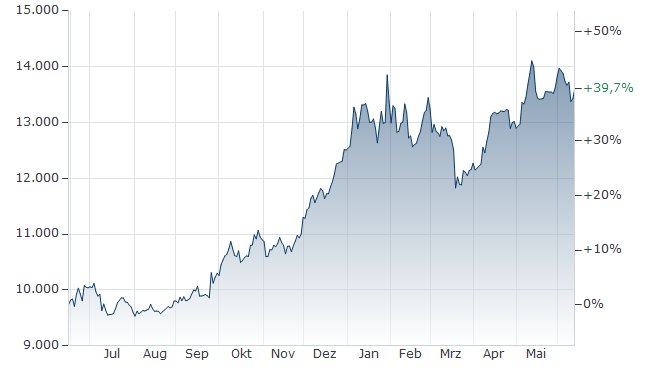
The copper price trend chart shows an increase of almost 40% compared to the previous year (as of June 15, 2026). Following a brief correction in late March and early April 2026, copper prices resumed their upward trajectory and climbed back above the USD 13,500 per tonne mark.
This development reflects the continued strong demand for copper, driven by growth in AI infrastructure, data centers, renewable energy systems, and electric vehicles, while supply-side constraints continue to support elevated price levels.
Gold
Gold prices can also be a significant driver of rising PCB costs. As of June 16, 2026, the gold price stood at approximately USD 4,337 per troy ounce, representing an increase of almost 25% compared to the previous year. Gold prices have a particularly strong impact on printed circuit boards featuring ENIG or ENEPIG surface finishes, where gold is an essential component of the coating process.
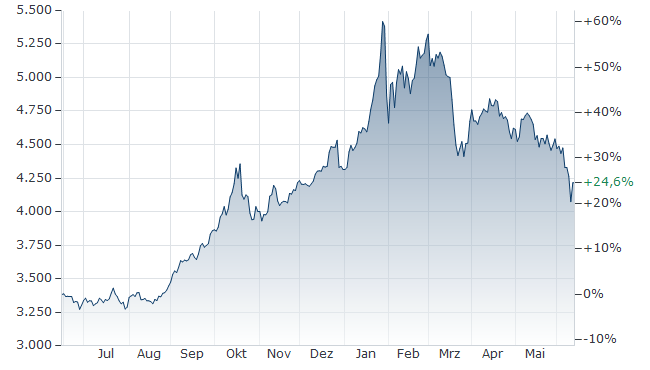
The chart shows that the current gold price is still below its all-time high of just over USD 5,400 per troy ounce. However, it has still recorded a substantial increase over the past 12 months. The high level of volatility can lead to significantly fluctuating prices.
Price Development of Other Factors
Resin
Resin prices continue to develop in a volatile manner, influenced by energy prices, crude oil markets, and global supply chains. In particular, epoxy resins are under cost pressure, as many of their precursors originate from the petrochemical industry. This industry is directly affected by the situation in the Strait of Hormuz. For the PCB industry, this results in persistently higher material costs for base materials and laminates.
Silver
Rising silver prices have a particularly strong impact on applications involving silver-containing surface finishes, conductive pastes, and other specialized uses. Strong demand from the electronics and solar industries further contributes to sustained cost pressure across the entire value chain.
Tin
Tin remains a key cost factor in the PCB and electronics industry, as it is essential for soldering processes and surface finishes. The significant price increase has a direct impact on manufacturing costs. Contributing factors include limited mining capacities, geopolitical uncertainties, and sustained strong demand from electronics production.
Chemicals
Chemicals used in etching, cleaning, and electroplating processes are also experiencing rising prices. The main drivers are higher energy and transportation costs, as well as stricter environmental and safety regulations. In particular, specialty chemicals are showing increasing price volatility, making long-term cost planning more challenging.
Glass fiber
Glass fiber prices remain at an elevated level. Key drivers include high energy costs in production as well as steady global demand from the electronics, automotive, and construction industries. As glass fiber is a key component of many PCB laminates, this directly impacts material costs.
Prepreg
Prepreg materials have also become more expensive as a result of rising raw material and energy costs. In addition to higher resin prices, increased costs for glass fiber fabrics as well as transportation and production are key contributing factors. The availability of fine glass fiber fabrics and prepreg types such as 106, 1080, 2116, and 7628 remains particularly critical. These materials are increasingly used in AI servers, networking equipment, and complex multilayer and high-speed PCBs, making them among the most in-demand materials on the market. As a result, manufacturers continue to factor in higher procurement prices and longer price validity periods.
Tungsten
Tungsten, or carbide materials used for drilling and milling tools in PCB manufacturing, is also affected by rising prices. The main drivers include geopolitical dependencies, increasing energy and processing costs, as well as sustained strong demand from various industries. Higher tooling costs have a direct impact on mechanical processing steps such as drilling and milling, thereby increasing overall manufacturing costs.
Oil
Rising oil prices are significantly increasing transportation costs for printed circuit boards. Geopolitical developments around the Strait of Hormuz have driven oil prices higher in recent months. In particular, for long intercontinental supply routes from Asia, increasing costs for air and sea freight can have a direct impact on PCB costs.
Price Drivers at a Glance
- Strongly increasing demand driven by growth markets such as 5G, e-mobility, and AI infrastructure
- Material shortages in high-quality laminates and specialty materials
- Geopolitical uncertainties and disrupted supply chains
- Technological requirements, e.g. for high-end PCBs with more layers and higher performance
- Rising energy prices
Strategic Responses to Volatile Price Developments
Early demand planning
Companies that work with longer forecast horizons are typically affected by market movements later than spot buyers. As a result, materials can be secured at an early stage, and express or premium procurement costs can be avoided.
Strategic inventory management
Our buffer warehouses in Europe, as well as the option to set up consignment stock for you, ensure shorter lead times, more stable production planning, and a reduction in express orders.
PCB layout optimization
Many cost-related challenges already arise during the PCB layout phase. We support you in optimizing the cost structure of your printed circuit boards. Our long-standing experience in PCB design ensures high-quality and economically optimized products.
Continuous price monitoring
By monitoring price developments across all relevant factors, risks can be identified at an early stage and appropriate actions can be derived. We keep you informed through regular updates.
It is not the lowest PCB price that determines competitiveness, but rather supply security, predictability, and time-to-market.
Outlook
The global PCB market continues to grow dynamically despite rising costs. Key growth drivers remain AI data centers, high-performance computing, automotive electronics, as well as applications in defense and industrial automation. In particular, HDI, high-layer count, and high-frequency PCBs are in strong demand.
On the pricing side, no sustainable relief is in sight. Rising raw material costs—especially for copper, laminates, and glass fiber fabrics—continue to create persistent cost pressure worldwide. In addition, geopolitical tensions are increasingly exacerbating supply chain challenges.
For procurement and supply chain planning, this means that the following aspects remain critical:
longer lead times
high price volatility
increased importance of strategic supplier partnerships
Companies that respond early to volatility and adapt their sourcing strategies secure decisive competitive advantages. Short-term price declines currently appear unlikely.
Contact us
If you have any questions, please feel free to contact us at any time. Together we will find a solution. You can find our contact persons at the following link:
https://sye-europe.com/kontakt/